Grooming
A Calm At-Home Grooming Routine for Dogs
Brushing, bathing, and nail care without the stress.
This content provides general educational information and is not a substitute for professional veterinary advice.
Regular grooming does more than keep your dog looking good. It keeps skin and coat healthy, prevents painful matting, and gives you a chance to notice lumps, sore spots, or parasites early.
A calm, predictable routine makes grooming something your dog tolerates — and ideally enjoys.
Know your dog's coat type
Grooming needs vary widely by coat.
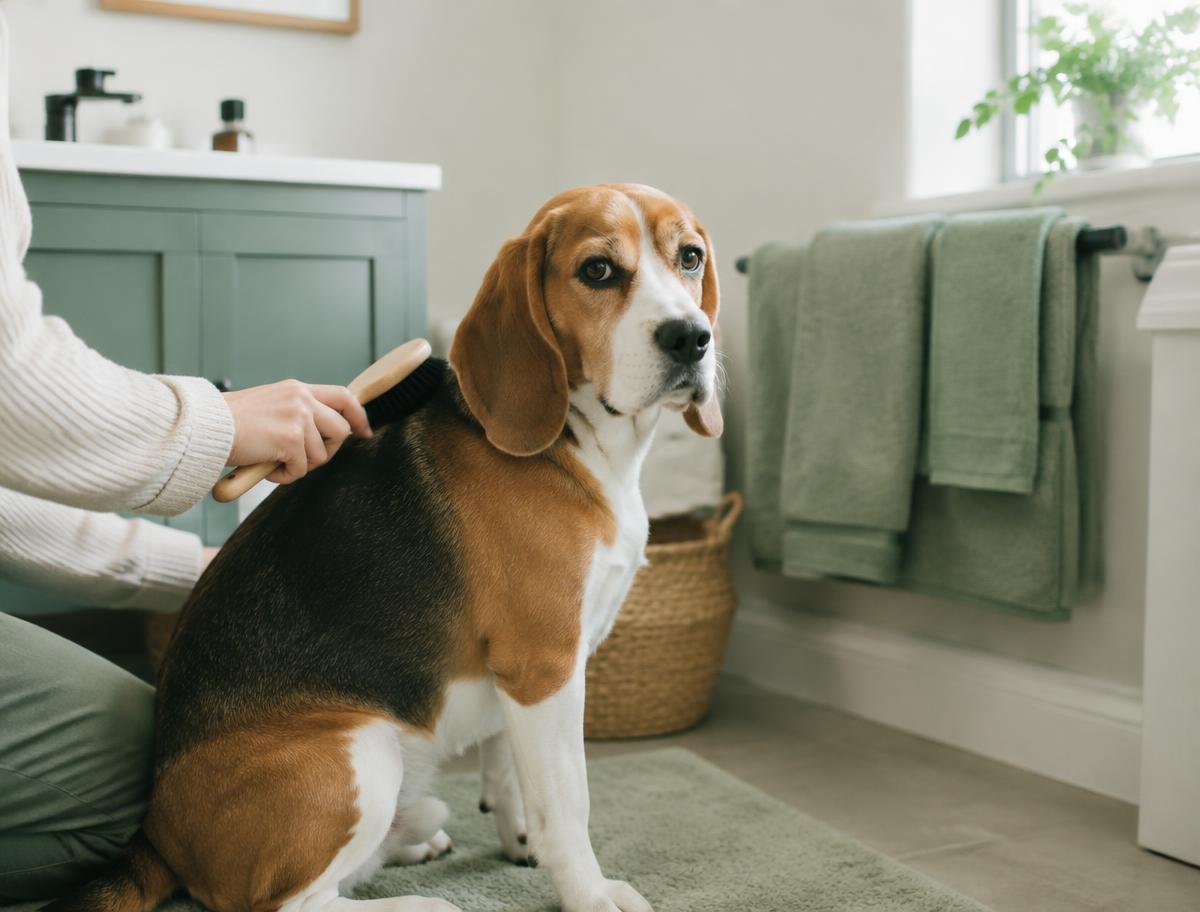
- Short, smooth coats (Beagles, Boxers): weekly brushing with a rubber curry or bristle brush
- Double coats (Labradors, Huskies): weekly brushing, more during seasonal shedding, using an undercoat rake
- Long or silky coats (Cavaliers, Setters): brushing several times a week with a pin brush and comb
- Curly or wool coats (Poodles, Doodles): frequent brushing to the skin plus regular professional clipping
Brushing
Brush in the direction of hair growth, working in small sections. Use a comb afterward to check for missed tangles, especially behind the ears, under the collar, and in the armpits.
Dealing with mats
Small tangles can often be teased out with fingers and a detangling spray. Never try to cut tight mats close to the skin with scissors — it is very easy to cut skin. A groomer can remove them safely.
Bathing
Most dogs need a bath only every few weeks to few months, unless they've rolled in something. Over-bathing can dry the skin.
- Brush thoroughly before bathing; water tightens mats.
- Use lukewarm water and a shampoo made for dogs.
- Avoid getting water and shampoo in the eyes and ears.
- Rinse very thoroughly — leftover shampoo can irritate skin.
- Towel dry, then air dry or use a dryer on a low, cool setting.
Nail trimming
If you can hear your dog's nails clicking on hard floors, they're probably due for a trim. Trim small amounts at a time to avoid the quick — the sensitive blood vessel inside the nail. Keep styptic powder nearby in case of a small nick. If you're unsure, ask your vet or groomer to show you.
Ears and teeth
Check ears weekly for redness, odor, or discharge, and clean only the visible outer ear with a dog ear cleaner if recommended. Daily toothbrushing with a dog toothpaste is the gold standard for dental health; even a few times a week helps.
Making grooming calm
Start with short sessions, reward generously, and stop before your dog becomes uncomfortable. Pairing handling of paws, ears, and mouth with treats from puppyhood makes future grooming far easier.
Common mistakes
- Using human shampoo
- Bathing a matted coat
- Cutting mats with scissors
- Trimming too much nail at once
- Pushing through when your dog is clearly stressed
Frequently asked questions
How often should I brush my dog?
Anywhere from weekly for short coats to daily for long or curly coats. Brushing more during shedding season helps a lot.
Can I use baby shampoo on my dog?
It's better to use a shampoo formulated for dogs, as their skin pH differs from ours.
What if my dog hates nail trims?
Go slowly — one nail per session is fine — and pair handling with rewards. A groomer or vet clinic can help if it's very stressful.
The bottom line
A short, consistent routine suited to your dog's coat, plus plenty of patience and rewards, is more effective than an occasional marathon grooming session.
Continue exploring
Watch the Video
Whiskers, Paws & Claws Editorial Team
Editorial Team
Related reading
Pet Care
How to Choose a Name Your Pet Will Grow Into
Sound, length, and meaning — a few gentle rules for naming.
Whiskers, Paws & Claws Editorial Team
Dogs
The Gentle Guide to Positive Reinforcement Training
How to teach lasting good manners with patience, timing, and the right rewards.
Whiskers, Paws & Claws Editorial Team
Cats
Reading Your Cat's Body Language, Tail to Whiskers
A calm, practical guide to what your cat is really telling you.
Whiskers, Paws & Claws Editorial Team