Behavior
Reading Your Cat's Body Language, Tail to Whiskers
A calm, practical guide to what your cat is really telling you.
This content provides general educational information and is not a substitute for professional veterinary advice.
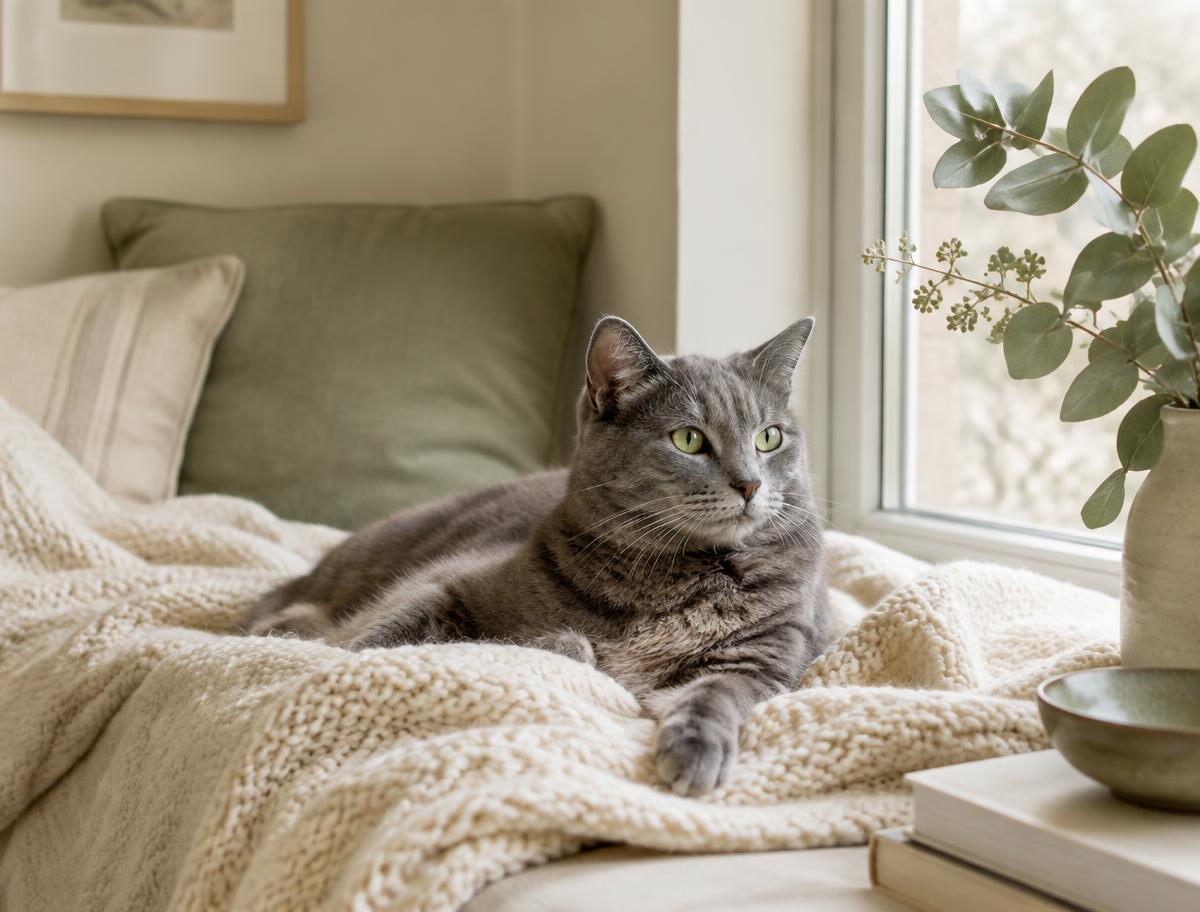
Cats communicate constantly — just more quietly than dogs. Much of what they say is written in the position of the tail, the angle of the ears, the shape of the eyes, and the way they hold their body.
Learning to read these signals helps you know when your cat wants company, when to give space, and when a change in behavior might be worth a closer look.
Tail positions
The tail is often the easiest signal to read from across the room. Always look at it together with the rest of the body.
- Upright with a slight hook at the tip: friendly, confident, pleased to see you
- Low or tucked: uncertain, anxious, or submissive
- Puffed up: frightened or startled — give space
- Slow side-to-side swish: focused, sometimes building irritation
- Fast thrashing or thumping: overstimulated; it's time to stop petting
Ear positions
Cats have more than 30 muscles in each ear, so ear position changes quickly and is very expressive.
- Forward and upright: alert, curious, relaxed
- Swiveling: listening and monitoring surroundings
- Sideways ("airplane ears"): uneasy or irritated
- Flattened back against the head: fearful or defensive
Eye contact and slow blinking
In feline terms, a long direct stare can feel confrontational. Relaxed, half-closed eyes signal trust.
Returning a slow blink
Look toward your cat with soft eyes, slowly close them for a second or two, then look slightly away. Many cats will blink back — a small, friendly exchange.
Pupil size
Pupils change with light, but wide pupils in a bright room can indicate excitement, play arousal, or fear. Read them alongside ears and tail.
Whisker position
Whiskers are sensitive touch receptors, and their position offers subtle mood clues. Relaxed whiskers sit out to the side. Whiskers pushed forward often mean interest or hunting focus. Whiskers pinned back against the face suggest fear or discomfort.
Posture
A cat lying on its side or back with a loose body is relaxed — though an exposed belly is usually a sign of trust, not an invitation to rub it. A crouched, compact posture with feet tucked under can signal tension. An arched back with raised fur is a defensive display meant to look bigger.
Vocal cues
Adult cats rarely meow at each other; meowing is largely a way to communicate with people.
- Chirps and trills: friendly greetings, often used to lead you somewhere
- Purring: usually contentment, though some cats also purr when unwell or stressed
- Hissing or growling: a clear request for distance
- Chattering at a window: excitement or frustration watching prey
Signs of stress
Stress in cats is often quiet. Watch for hiding more than usual, over-grooming, changes in litter box habits, decreased appetite, or sudden irritability. New pets, moves, renovations, and changes in routine are common triggers.
When behavior changes may need veterinary attention
Cats are skilled at masking discomfort, so behavior changes are sometimes the first sign something is wrong. Contact your veterinarian if you notice a sudden change in temperament, hiding that lasts more than a day or two, urinating outside the litter box, straining in the litter box, reduced eating, or reluctance to jump.
Frequently asked questions
Why does my cat show me her belly and then swat?
An exposed belly usually signals trust and relaxation. Many cats dislike having their belly touched, and a swat is simply a request to stop.
Does purring always mean my cat is happy?
Usually, but not always. Some cats purr when stressed or unwell, so consider the context and the rest of their body language.
Why does my cat bite during petting?
This is often overstimulation. Watch for tail flicking, skin twitching, or ears turning sideways, and end the petting session before it builds.
The bottom line
No single signal tells the whole story. Read the tail, ears, eyes, whiskers, and posture together — and treat sudden behavior changes as a reason to check in with your veterinarian.
Continue exploring
Whiskers, Paws & Claws Editorial Team
Editorial Team
Related reading
Cats
Your Kitten's First Month: A Thoughtful Checklist
Everything to prepare, from litter setup to the first vet visit.
Whiskers, Paws & Claws Editorial Team

Dogs
The Gentle Guide to Positive Reinforcement Training
How to teach lasting good manners with patience, timing, and the right rewards.
Whiskers, Paws & Claws Editorial Team

Lifestyle
Autumn Walks: A Seasonal Ritual for You and Your Dog
Routes, gear, and safety notes for the most beautiful walking season.
Whiskers, Paws & Claws Editorial Team