
Buying Guides
Choosing the Right Grooming Brush for Your Dog or Cat
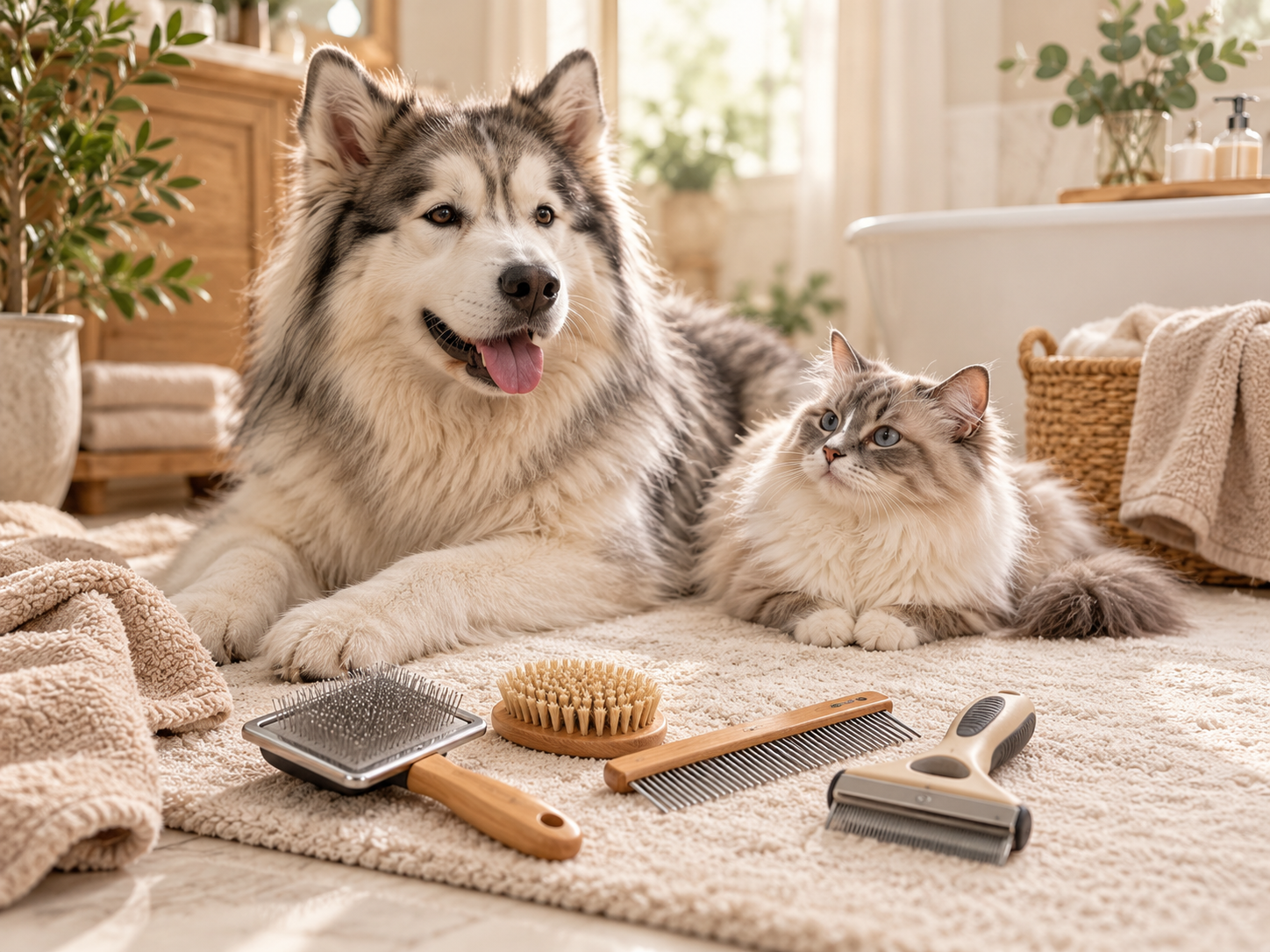
From slicker brushes to grooming combs, discover which tools suit different dog and cat coat types and how to choose them thoughtfully.
Some product recommendations may include affiliate links in the future, which may earn Whiskers, Paws & Claws a commission at no additional cost to you.
A practical guide to choosing grooming tools that suit your pet's coat, reduce unnecessary pulling, and help make brushing a more comfortable part of everyday care.
Walk into almost any pet store, and you'll find an impressive collection of brushes, combs, grooming gloves, and deshedding tools.
Some promise to remove loose hair. Others are designed for tangles, undercoats, or sensitive skin.
With so many choices, it's easy to assume that the most expensive tool or the one with the most impressive packaging must be the best.
But good grooming begins with something much simpler: understanding your pet's coat.
The right grooming brush can help remove loose fur, prevent tangles, and make routine coat care easier. The wrong one can pull uncomfortably, irritate sensitive skin, or simply fail to reach the areas that need attention.
Whether you share your home with a fluffy dog, a short-haired cat, or both, this guide will help you understand the different tools and make a more informed choice.
Why Regular Brushing Matters
Brushing is about more than keeping your pet looking tidy.
Routine grooming helps remove loose hair, dirt, and debris. It also gives you an opportunity to notice changes in the skin or coat.
While grooming, you may discover small tangles, burrs, unusual bumps, irritated areas, or other changes that might otherwise remain hidden beneath the fur.
Regular brushing can also make loose hair more manageable around the home.
However, brushing needs vary considerably.
A short-haired dog may need only occasional brushing, while a long-haired cat or a curly-coated dog may require much more frequent attention.
The goal isn't to brush constantly. It's to develop a routine appropriate for your pet.
First, Understand Your Pet's Coat Type
Before comparing grooming tools, consider your pet's coat.
Short, smooth coats
Pets with short, close-fitting fur generally need tools that remove loose hair without scraping the skin.
Rubber grooming mitts and soft-bristle brushes are often useful choices.
Medium-length coats
Medium coats may benefit from a combination of a bristle brush and a comb.
Some pets with denser coats also benefit from a carefully used slicker brush.
Long, silky coats
Long coats are more likely to develop tangles, especially behind the ears, around the legs, and in areas where the fur rubs against itself.
A gentle slicker brush and an appropriately sized metal comb can be helpful.
Thick double coats
Double-coated pets have a protective outer coat and a softer undercoat.
During shedding periods, loose undercoat can accumulate. A suitable undercoat tool or comb may help remove loosened hair, but technique and frequency matter.
Curly coats
Curly-coated dogs often need regular brushing and combing to prevent tangling and matting.
Because tight curls can conceal knots near the skin, a brush alone may not be sufficient.
If you're uncertain about your pet's coat type, ask a professional groomer or veterinarian for guidance.
Understanding the Most Common Grooming Tools
Not all pet brushes do the same job.
1. Slicker Brushes
Slicker brushes generally feature fine, closely spaced wire pins mounted on a flat or slightly curved head.
They are commonly used to work through loose hair and minor tangles in many medium, long, and curly coats.
Best suited for: Selected medium, long, or curly coat types.
What to look for: Flexible or appropriately designed pins, a comfortable handle, and a brush head suited to your pet's size.
Be careful: Excessive pressure or repeated brushing over one area can irritate the skin. A slicker brush should be used gently, never as a tool for forcefully pulling through mats.
2. Bristle Brushes
Bristle brushes use closely arranged natural or synthetic bristles.
They can help smooth the coat and remove surface debris and loose hair.
These brushes are often useful for pets with shorter coats or as a finishing tool after other grooming steps.
Best suited for: Short and some medium coats, depending on bristle stiffness.
What to look for: Bristles that are firm enough to be useful but gentle enough for your pet's skin.
Be careful: A soft bristle brush may not penetrate a thick undercoat or remove hidden tangles.
3. Rubber Brushes and Grooming Gloves
Rubber grooming brushes typically have flexible tips that massage the coat while helping collect loose hair.
Some are shaped like mitts or gloves, making them approachable for pets that dislike conventional brushes.
Best suited for: Many short-haired dogs and cats.
What to look for: Soft, flexible tips, easy cleaning, and a comfortable fit.
Be careful: Grooming gloves generally aren't designed to untangle long, matted fur.
4. Metal Grooming Combs
Metal combs are among the most useful tools for checking whether a coat has been brushed thoroughly.
They come in different tooth lengths and spacing.
Wider spacing may help with certain thicker or longer coats, while finer teeth can assist with detailed grooming when used appropriately.
Best suited for: Long coats, curly coats, and checking for remaining tangles.
What to look for: Smooth, rounded tooth tips, strong construction, and suitable tooth spacing.
Be careful: Never force a comb through tight knots. Pulling can cause discomfort and may injure delicate skin.
5. Undercoat and Deshedding Tools
Deshedding tools are designed to remove loose undercoat hair from suitable coat types.
Some use specialized combing edges, while others resemble rakes.
Best suited for: Certain shedding or double-coated pets.
What to look for: A tool specifically recommended for your pet's coat type, with clear manufacturer instructions.
Be careful: Using an aggressive deshedding tool too often or on an unsuitable coat may damage healthy hair or irritate the skin.
The word deshedding is not a guarantee that a tool is safe for every pet.
Grooming Tool Comparison
| Tool | Main purpose | Often useful for |
|---|---|---|
| Slicker brush | Loose hair and minor tangles | Many long, curly, and medium coats |
| Bristle brush | Smoothing and surface debris | Short and some medium coats |
| Rubber grooming mitt | Gentle loose-hair removal | Short-haired dogs and cats |
| Metal comb | Checking and separating coat | Long and curly coats |
| Undercoat tool | Removing loose undercoat | Suitable double-coated pets |
Many pets benefit from a combination of tools rather than one brush that attempts to do everything.
How to Choose a Brush for Your Dog
Start by observing how your dog's coat behaves.
Does it shed heavily? Does it tangle easily? Is the coat close to the body or thick and fluffy?
For a smooth-coated dog, a rubber grooming mitt and bristle brush may provide an excellent starting point.
For a dog with a longer coat, a slicker brush and grooming comb may be more appropriate.
For a double-coated dog, a professional groomer can help you determine whether an undercoat tool is suitable.
Also consider your dog's temperament.
Some dogs enjoy brushing immediately. Others need time to become comfortable with the experience.
A brush that is technically appropriate but consistently frightens your dog may not be the best practical choice.
Comfort matters just as much as tool design.
How to Choose a Brush for Your Cat
Cats deserve equally thoughtful grooming choices.
Many short-haired cats can be maintained with gentle brushing and combing.
Long-haired cats may require more frequent attention to help prevent tangles from becoming uncomfortable mats.
A metal comb can be helpful for checking the coat, while rubber brushes may work well for cats with shorter fur.
Choose tools that allow you to work gently and avoid pulling on sensitive areas.
Cats can be especially sensitive to handling around the belly, legs, and tail.
Keep sessions short and observe your cat's reactions.
A relaxed cat may lean into gentle brushing. A stressed cat may flick its tail sharply, flatten its ears, or attempt to move away.
Those signals should be respected.
A Simple At-Home Grooming Routine
You don't need an elaborate grooming station to establish a useful routine.
A calm, familiar space and a few suitable tools are often enough.
Step 1: Prepare the environment
Choose a quiet, comfortable location with secure footing.
Gather your brush, comb, a few treats if appropriate, and a towel.
Step 2: Let your pet investigate
Allow your dog or cat to sniff or observe the grooming tool.
Avoid immediately beginning a long brushing session with a pet unfamiliar with grooming.
Step 3: Begin with gentle strokes
Brush in the natural direction of hair growth using light pressure.
Start with areas your pet generally tolerates.
Step 4: Check for tangles
Pay attention to areas such as behind the ears, under the legs, and around the collar or harness.
If you find a tight mat, don't pull forcefully or cut close to the skin with scissors.
Step 5: Keep the experience positive
Pause when your pet becomes uncomfortable.
Short, successful sessions can be more productive than a long session that leaves your pet stressed.
Step 6: Clean your tools
Remove collected hair and clean brushes according to the manufacturer's instructions.
Store tools somewhere dry and accessible.
Common Grooming Mistakes to Avoid
Even well-intentioned pet owners can make grooming uncomfortable by using unsuitable techniques.
Using too much pressure
More pressure doesn't necessarily remove more loose hair. It can irritate the skin.
Using the wrong tool
A brush designed for heavy undercoats may be inappropriate for a pet with a fine, short coat.
Forcing through tangles
Dense mats can be painful and difficult to remove safely. Seek professional help when needed.
Ignoring your pet's behavior
Stress, discomfort, and avoidance are important signals.
Brushing too aggressively during shedding season
A shedding coat may benefit from more frequent attention, but aggressive brushing isn't a substitute for suitable tools and good technique.
Assuming every coat needs the same schedule
Coat length, texture, season, age, and individual condition influence grooming needs.
How Often Should You Brush?
There is no single schedule appropriate for every dog or cat.
Short coats generally require less maintenance than long or curly coats.
Long-haired pets may need brushing every day or every few days, depending on their coat.
Seasonal shedding can also increase the amount of loose fur requiring attention.
An individual pet's age and ability to groom themselves may influence the routine.
Rather than treating a schedule as a rigid rule, consider how quickly tangles or loose hair accumulate.
Your veterinarian or professional groomer can recommend a schedule appropriate for your pet.
Choosing a Quality Grooming Tool
Before purchasing, think beyond the product's appearance.
Look for comfortable grips, smooth construction, appropriate bristle or tooth design, and straightforward cleaning instructions.
Consider these questions:
- Does the tool suit my pet's coat type?
- Can I handle it comfortably?
- Are the pins or bristles appropriate for sensitive skin?
- Is it easy to remove trapped fur?
- Does the size work for my pet?
- Are replacement parts available if needed?
- Do the instructions clearly explain appropriate use?
A well-designed basic comb can sometimes be more valuable than an expensive multipurpose gadget.
Do You Need a Complete Grooming Kit?
Not necessarily.
A small collection tailored to your pet is often more practical than purchasing a large grooming bundle.
For many households, a useful starting kit might include an appropriate brush, a metal comb, a dedicated towel, and pet-safe cleaning supplies.
Additional tools can be added as specific needs arise.
If professional trimming, complex coat maintenance, or mat removal is needed, a qualified groomer is often the better choice.
Frequently Asked Questions
Can I use the same brush for my dog and cat?
Possibly, if the tool is appropriate for both coat types and is cleaned properly. However, differences in coat texture, skin sensitivity, and temperament may make separate tools preferable.
Are slicker brushes safe for cats?
Some slicker brushes are suitable for certain cats when used gently. Tool selection should depend on coat type, brush design, and the cat's comfort.
Should I brush my pet when their fur is wet?
That depends on coat type and the grooming process. Wet fur can be more vulnerable to pulling or breakage. Follow professional guidance for your pet's particular coat.
Can brushing stop shedding?
No. Shedding is a natural process. Appropriate grooming can help collect loose hair before it spreads around the home.
What if my pet has severe mats?
Avoid forcing a brush through tightly matted fur or cutting mats close to the skin. A professional groomer or veterinarian can help determine the safest approach.
What if I notice redness, sores, or unusual hair loss?
Stop brushing affected areas and consult your veterinarian. Skin changes may require medical attention rather than a different grooming product.
The Bottom Line
The best grooming brush isn't necessarily the most expensive or most heavily advertised.
It's the one that works with your pet's coat, feels comfortable during use, and helps you maintain a gentle, consistent care routine.
Start with coat type, prioritize comfort, and choose quality over quantity.
A simple, thoughtfully selected grooming kit can make everyday coat care easier for both you and your companion.
And perhaps most importantly, brushing can become a pleasant moment of connection rather than another chore on your list.
Editorial note: This article provides general pet-grooming and product-selection information. It is not based on hands-on product testing and does not replace guidance from a veterinarian or qualified professional groomer.
Beds
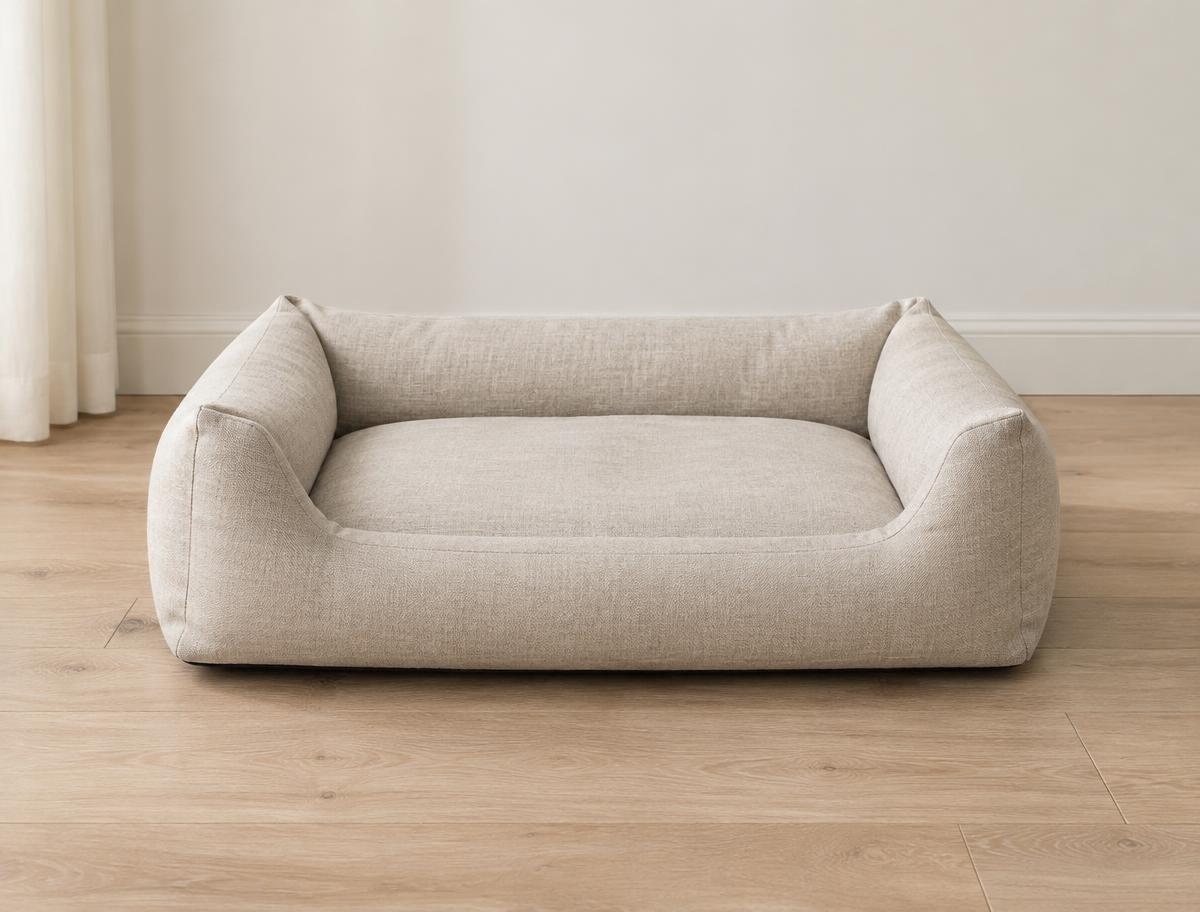
Linen Bolster Dog Bed
Supportive foam with a washable linen cover that suits calm interiors.
- Best for:
- Medium dogs who like to lean
- Consider:
- Cover dries slowly
Feeding
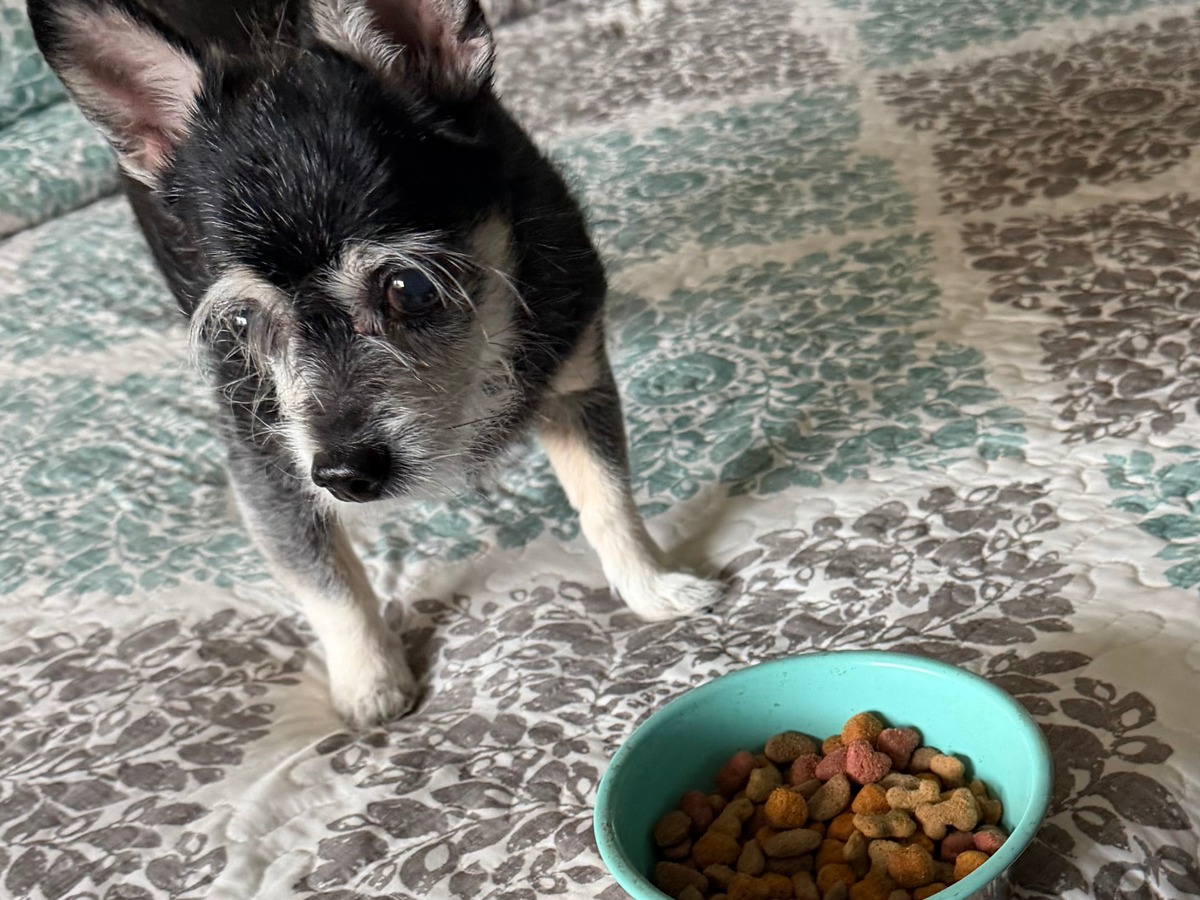
Mealtime Setup for Senior Small Dogs
A simple, comfortable feeding setup that works well for older small dogs with familiar daily routines.
- Best for:
- Senior small dogs
- Consider:
- Bowl height, easy cleaning, and your dog's comfort
Whiskers, Paws & Claws Editorial Team
Editorial Team
Related reading
Reviews
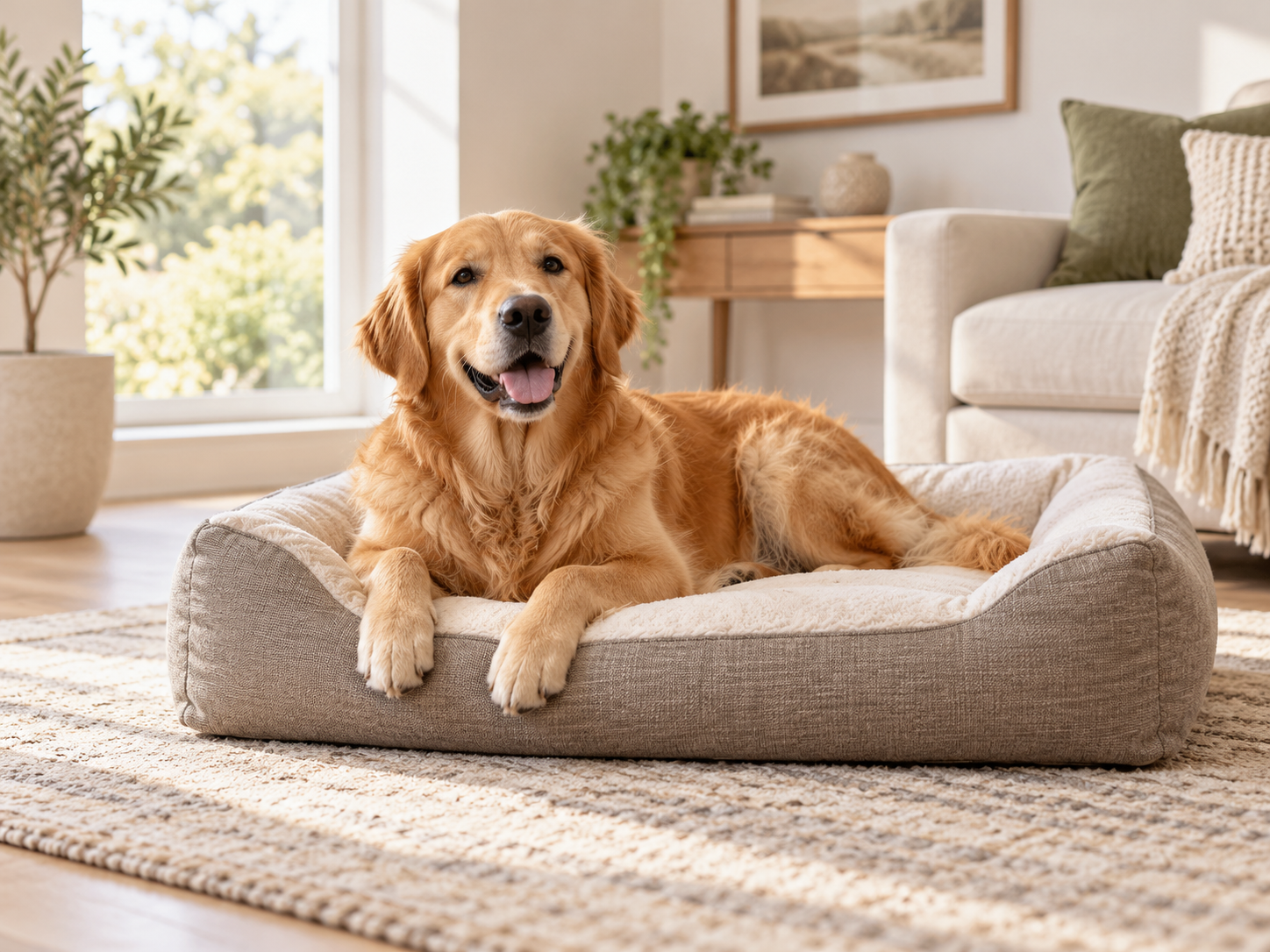
How to Choose the Right Dog Bed
Support, size, materials, and washability — finding a bed that suits your dog.
Whiskers, Paws & Claws Editorial Team

Reviews
Elevated vs. Plush Dog Beds: Which Is Right for Your Pet?
Elevated or plush? Compare dog-bed comfort, support, cleaning, temperature, and accessibility to find the right resting spot for your companion.
Whiskers, Paws & Claws Editorial Team
Reviews
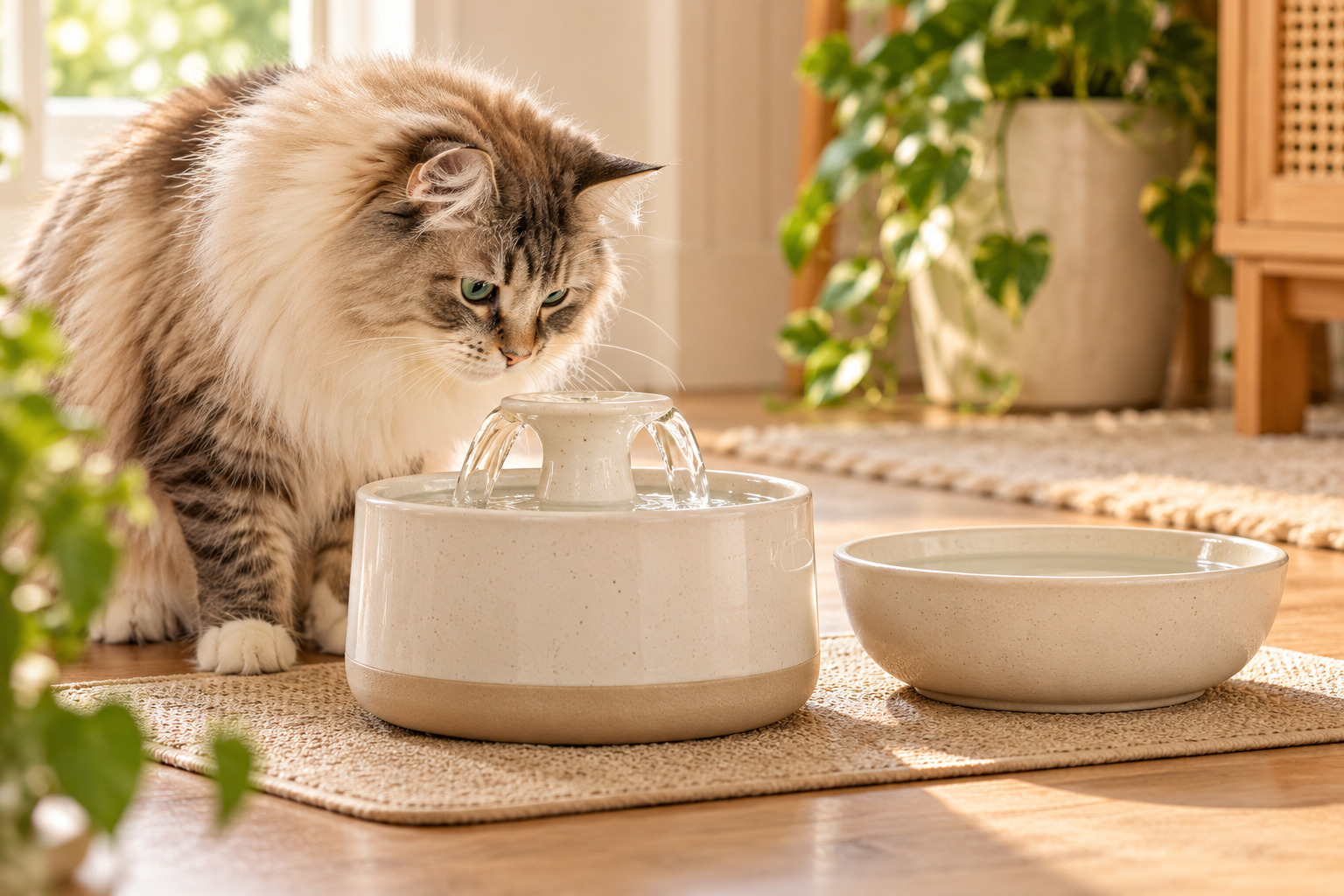
Cat Water Fountains vs. Traditional Bowls: Which Is Better for Your Cat?
Is running water really better for cats? Compare fountains and traditional bowls, including cleaning, costs, and everyday hydration.
Whiskers, Paws & Claws Editorial Team